Cape Coral · Lee County, Florida
Roofers who actually
work in Cape Coral.
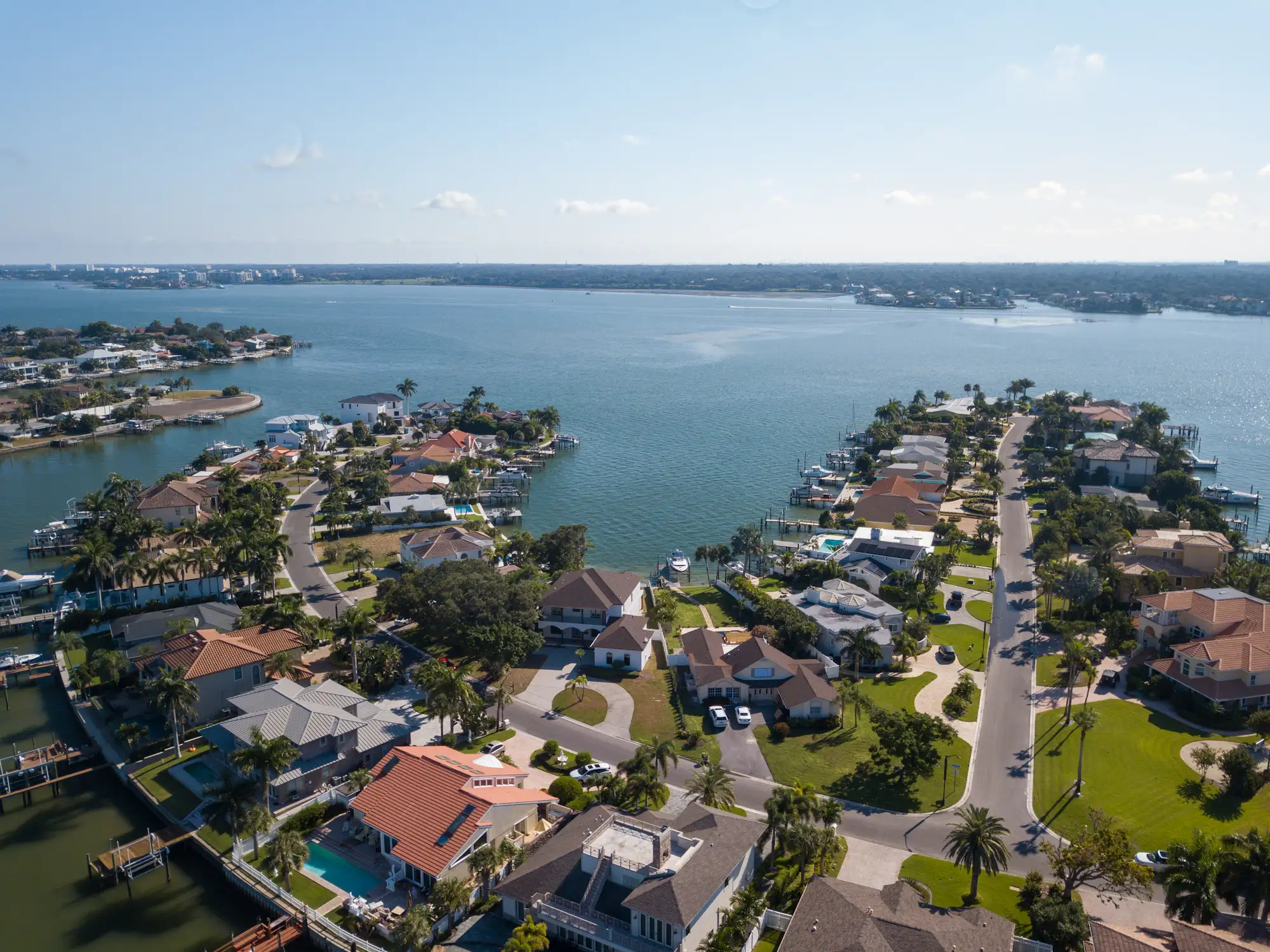
Cape Coral is a very particular roofing environment — wide open lots, a lot of water, and salt in the air for most of the city. Free inspection, photographs of everything, and a written report you keep whatever you decide.
About 25 minutes from our office. Monday to Friday, 9 to 5. Water coming in right now? Call, don't use the form.
- Free, with no obligation
- Written report with photos
- Office on Cypress Lake Drive
Free inspection
Photos and a written report, no obligation.
Local office
Cypress Lake Drive, Fort Myers — not a call centre.
Lee County permits
Your contractor pulls them. You don't.
Repair before replace
When repair genuinely holds.
Local knowledge
What's different about roofs in Cape Coral
Roofs don't fail the same way everywhere, even inside one county.
Open exposure, and what that does
Cape Coral has far less tree and building shelter than the older parts of Fort Myers. Less shelter means higher effective wind loads at the roof edges — and edges and corners are exactly where wind uplift concentrates. Edge fastening is the thing worth getting right here.
Salt, and the metal on your roof
With over 400 miles of canals and a lot of property close to open water, metal components corrode faster than inland. Drip edge, valley metal, flashing and fasteners are the first to go. We look at the metal before we look at the tile.
Newer stock, newer code
A lot of the Cape has been re-roofed relatively recently, which is good news under s. 553.844(5): if the roof was done to the 2007 Florida Building Code or later, only the repaired portion has to meet current code, so a sensible repair stays a repair.
Canal-front access
Some properties are genuinely awkward to work — narrow side setbacks, seawalls, screened cages. It affects the price and we'd rather say so up front than discover it on the day.
Permits
Who actually issues your roof permit in Cape Coral
Roofing is permitted work here, and the office that issues the permit is not the same in every one of our four cities. Your contractor pulls it either way — but it is worth knowing which desk your job lands on, because it changes what gets inspected and when.
City of Cape Coral, not the county
Cape Coral runs its own permitting. Applications go through the city's EnerGov Citizen Self-Service portal, through Permitting Services in Development Services — a different desk, different system and different fee schedule from unincorporated Lee County.
The 2002 and 2007 dates that decide your sheathing inspection
Cape Coral's residential re-roof guideline requires a sheathing inspection or a sheathing affidavit if the home's original construction permit predates 1 March 2002, or if there's been no complete re-roof since 1 March 2007. It's the single most common surprise on a Cape re-roof, and it's decided by paperwork that already exists before anyone arrives.
What gets inspected, and the clock
Notice of Commencement, sheathing, dry-in, a 90-lb inspection on tile roofs, then final. A Notice of Commencement is required once the job is valued at $2,500 or more. The city's published roofing miscellaneous fee is $75 plus surcharge, and the permit expires after six months.
After the roof: wind mitigation
Once a roof is replaced, Florida's uniform mitigation inspection form (OIR-B1-1802) is what lets an insurer see the wind-resistant features you've just paid for — roof cover, deck attachment, roof-to-wall connection, and whether there's a secondary water barrier. Under s. 627.0629 insurers have to give actuarially reasonable discounts for those features. We won't quote you a dollar figure, because the saving depends on your carrier and your house — but a new roof with no mitigation form filed is money left sitting there.
Sourced from each issuing authority's own published guidance. Where we could not confirm a detail directly with the department, we say so above rather than fill the gap — and it gets checked on your job rather than guessed at here.
What we do here
The same work, in Cape Coral.
Free roof inspection
Full walk of the exterior, attic where there's safe access, photographs of every problem area and a written report. How an inspection works
Roof repair
Tile, shingle and flat. The right answer is fixing the section that failed, not selling a roof you don't need yet. What gets repaired
Storm damage repair
Emergency dry-in first, documented before cleanup, rebuilt afterwards. After a storm
Roof replacement
When the roof has reached the end rather than failed in one spot, and what the 2023 Florida code requires once the covering comes off. How replacement works
Roof rejuvenation & restoration
More years from a roof that is worn rather than failed, when the inspection says it is a candidate. When it is worth it
Insurance claim documentation
Photographs, measurements and a scope of work. We're not permitted to negotiate the claim and we'll explain who is. What a roofer may do
Roof replacement
Replacing a roof in Cape Coral.
Wide open canal lots with no tree break, so the edges and corners take the wind first — and salt reaches every fastener before it reaches the covering. Each covering fails in its own way and raises its own questions, so they have a page each.
Shingle roof replacement
The common one, and the page that explains why the underlayment specification matters more than the shingle brand.
Metal roof replacement
Standing seam or exposed fastener, coastal corrosion, and why metal does not automatically earn an insurance credit.
Tile roof replacement
The tile is usually fine. The underlayment beneath it is what expires, and that decides lift-and-relay against full replacement.
Flat roof replacement
Low-slope and flat sections, where most Florida failures turn out to be drainage rather than the membrane.
Not sure a replacement is what you need? A leak does not mean a new roof, and a free inspection settles it either way. We cover four cities in Lee County.
Around Cape Coral
Cape Coral, quadrant by quadrant.
The city was built from the south up, and the roofs still follow that order.
Southeast and southwest Cape: the older canal neighborhoods
The oldest parts of the city, around the Yacht Club, Cape Harbour and the older canal streets. Plenty of homes here had their original permit before March 1, 2002, which is what triggers the city's sheathing inspection or affidavit on a re-roof. Gulf-access canals also bring salt closer, so fasteners and flashings corrode sooner than inland. How the sheathing affidavit works.
Northeast and northwest Cape: newer homes, open lots
Newer construction, mostly to the 2007 code or later, often with vacant lots and few mature trees around it. Wind reaches these roofs with nothing to slow it down, so edges, corners and ridge caps take the load first. That is where we look hardest after a storm.
Roofs that went on after Ian
Cape Coral took a hard hit from Hurricane Ian in 2022 and a great many roofs were replaced in the rush afterwards. If yours was one, make sure the permit shows a final inspection, ask for a copy of the sheathing affidavit and the deck photographs if your house needed one, and keep the workmanship warranty. Those three documents settle most arguments later.
Canal-front and metal roofs
Metal near salt water ages at its fasteners and cut edges first. A sound metal roof with early corrosion is often a candidate for restoration rather than replacement, provided the panels themselves have not rusted through. And if a replacement is coming, here is what it costs in Lee County.
Cape Coral
Questions from Cape Coral
Is salt air really a factor this far from the Gulf?
In much of Cape Coral, yes. The canal system carries brackish water deep into the city. It doesn't wreck tile, but it shortens the life of every piece of metal on the roof, and metal is where a great many leaks start.
Do you work the north Cape as well?
Yes. It's a longer drive, and for an emergency dry-in that's worth knowing when we're triaging — we'll tell you a realistic time rather than an optimistic one.
Do you charge for the visit?
No. The inspection, the photographs and the written report are free, and there's no obligation to book work afterwards.
How far out are you booking?
Depends on the week and on whether anything has just come through. Call and we'll tell you the real number rather than a comfortable one. Active leaks get moved up.
Who pulls the permit?
Your contractor does. Roofing work here is permitted work and the licensed contractor files it, not you. If a roofer asks you to pull an owner-builder permit for their work, that should worry you.
Book a free inspection
Get a Cape Coral roof looked at.
Free, about an hour on site, and you keep the photographs and the written report whatever you decide to do next.
Get a free inspection in Cape Coral.
About an hour on site. Photos and a written report, whether or not you hire us.
Book a free inspection