Roofing advice
How to tell if a storm damaged your roof in Fort Myers, without going up there
Nine checks you can make from the ground, the driveway and inside your house. No ladder needed, and all of them worth doing within a week of the storm.
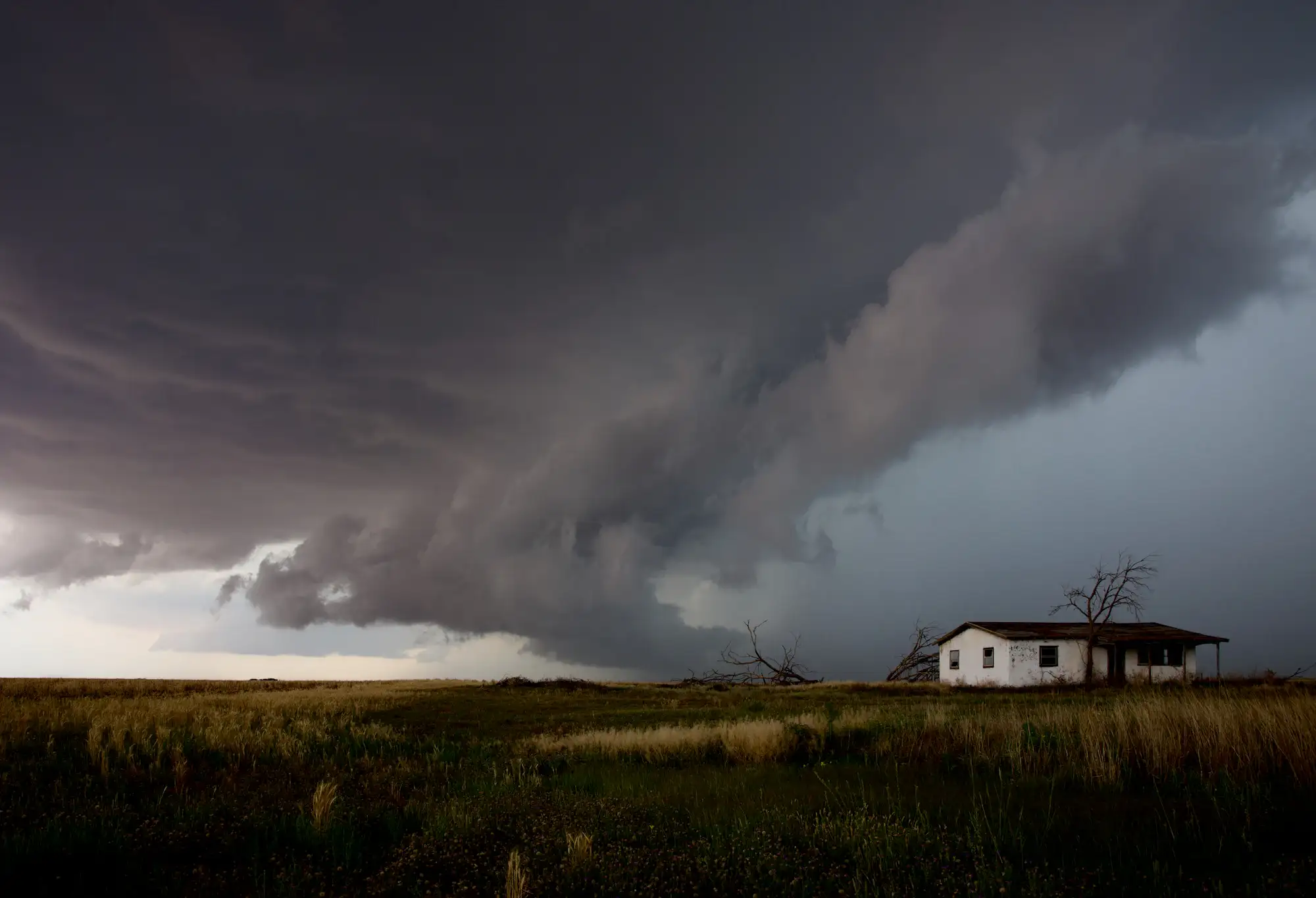
First, don't get on the roof
Storm-damaged tile is unpredictable and wet tile is worse. More people are hurt inspecting roofs after storms than by the storms. Everything below is visible from the ground, the driveway, a window or the inside of the house.
From the ground, around all four sides
1. Tile on the lawn or in the flower beds. The obvious one, but check the beds and behind the AC unit as well as the open grass. One piece is enough to tell you a course has been broken into.
2. A line that isn't straight. Sight along the ridge and along each course. Tile roofs read as a grid from the street, and a displaced tile breaks the grid visibly once you're looking for it.
3. The edges, particularly corners. Wind uplift concentrates at eaves, rakes, ridges and corners rather than in the middle of a slope. That's where to look hardest.
4. Granules or debris in the gutters and at downspout outlets. On a shingle roof, granules in quantity mean the surface has been beaten. On tile, look for chips and fragments.
5. Anything metal that's moved. Drip edge, valley metal, vent collars, the flashing around a chimney. Metal bends visibly and doesn't bend back.
From inside
6. Ceiling stains — and not just under where you think the damage is. Water runs down a rafter, across the top of a ceiling and comes out at a seam, sometimes rooms away from where it got in.
7. The attic, if you can get into it safely. Daylight through the deck is unambiguous. So is a damp patch on the sheathing or insulation that has gone flat and dark in one spot.
8. Doors and windows that have started sticking. Occasionally a sign of structural movement rather than a roofing problem — but worth reporting either way.
9. The smell. A closed-up room that smells of damp a week after a storm is telling you something before any stain appears.
Photograph it all now, whether or not you claim
Date-stamped photographs taken in the week after a storm are worth a great deal later. Under s. 627.70132, Florida Statutes, you have one year from the date of loss to give notice of a claim and 18 months for a supplemental claim, with the clock starting at landfall for a hurricane. A supplemental claim filed at month fifteen is a much easier conversation when there are photographs from week one.
And if everything on the list looks fine
It still might not be. The most expensive storm damage is the kind that leaves no visible trace — fasteners pulled loose with the tile still sitting in place, underlayment torn under unbroken tile, flashing lifted a quarter of an inch. None of it shows until the next heavy rain.
That's the argument for having someone look properly after a serious wind event, even when your list comes back clean.
If you did find damage
Stay off the roof, photograph everything before anything is moved, stop water getting in, and tell your insurer. Then get it dried in and documented before it is repaired, in that order. Storm and wind damage roof repair, step by step.
Want someone to look at yours?
Free inspection across Fort Myers, Cape Coral, Estero and Bonita Springs. Photographs of every problem area and a written report you keep.
Book a free inspection